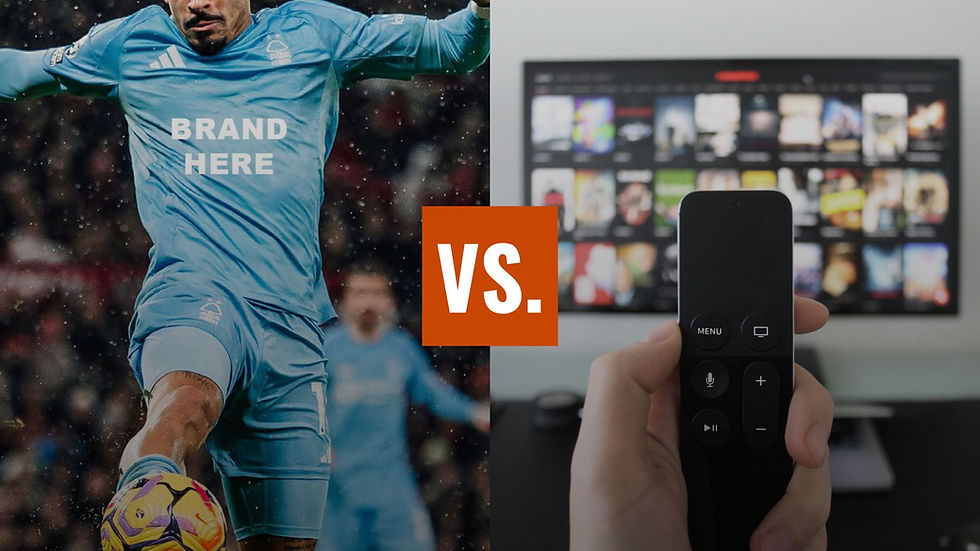
Why Do Brands Invest in Football Sponsorship? The Data Behind the World's Most Powerful Marketing Channel
Every year, brands invest billions of dollars into football sponsorship.
From global brands such as Emirates, Adidas, Nike and Coca-Cola to fast-growing technology companies, fintechs, travel businesses and consumer brands, football continues to attract marketing budgets that many other media channels simply cannot compete with.
Why?
Because football isn't simply another advertising platform.

It combines global reach, emotional engagement, premium attention, cultural relevance and year-round storytelling in a way almost no other marketing channel can replicate.
For marketers who have never invested in sport, football sponsorship can sometimes appear expensive or difficult to measure. Yet the data tells a very different story.
In today's fragmented media landscape, where digital ads are skipped, television commercials are ignored and consumers actively block advertising, football remains one of the few environments where brands are welcomed into content people genuinely care about.
Here's why brands continue investing in football, and why many marketers now view it as one of the smartest long-term brand-building investments available.
The Marketing Problem: Attention Has Never Been Harder to Earn
Modern marketing isn't suffering from a lack of channels. It's suffering from a lack of attention. Consumers are exposed to thousands of marketing messages every day, while digital platforms have made advertising increasingly interruptive.
Research shows consumers ignore online display advertising and actively use ad blockers. What's more, consumers develop negativity toward brands that interrupt their viewing experience, especially for live moments like sport, any many actively skip television advertising whenever possible.
This creates a major challenge for marketers. Buying impressions has become relatively easy. Buying genuine attention has become much harder. Football solves this problem because brands become part of the experience rather than interrupting it.
Football Is the World's Largest Passion Platform
Football is not simply the world's biggest sport. It is arguably the world's largest cultural community. Around 5 billion people globally follow football, making it the most followed sport on earth.
Unlike many entertainment properties, football is:
watched live
discussed daily
shared socially
followed across generations
deeply embedded within local culture
For marketers, that means football delivers something increasingly rare:
Consistent emotional attention at enormous scale.
Live Sport Creates Attention That Digital Advertising Cannot
One of football's biggest commercial advantages is that audiences choose to watch. Unlike scrolling social media feeds or browsing websites, football fans actively tune in for 90 minutes and remain engaged throughout the match.
This creates what marketers describe as a high-attention environment. Unlike interruptive advertising, football sponsorship is embedded inside the viewing experience.
Brands appear during:
goals
celebrations
key tackles
match-winning moments
dramatic finales
Instead of competing against the content, they become associated with it.
This is one reason sponsorship consistently outperforms many traditional awareness campaigns.
Football Delivers Global Reach Every Single Week
Few marketing platforms offer consistent international visibility throughout the year.
For example, the Premier League alone reaches:
200+ territories
3.1 billion+ cumulative television audience
920 million households
420,000+ broadcast hours annually
Unlike one-off events such as the Olympics or World Cup, football offers repeated exposure every week. That repetition matters.
Marketing science consistently shows that repeated exposure increases familiarity, recall and purchase consideration. Football naturally provides that frequency.
Football Builds Trust Faster Than Traditional Advertising
Consumers increasingly trust recommendations, communities and cultural associations more than advertising. Football clubs already possess something brands spend decades trying to build: loyalty.
Fans don't simply watch. They identify. When brands align with clubs, leagues or respected football personalities, they benefit from existing emotional equity.
This is why sponsorship often improves:
brand credibility
familiarity
trust
perceived market leadership
Instead of introducing themselves through advertising, brands become part of an existing story.
Football Sponsorship Doesn't End When The Match Finishes
One of the biggest misconceptions surrounding sponsorship is that visibility lasts only during the game. Today's football ecosystem extends far beyond ninety minutes.
Matches are:
clipped into highlights
shared across social platforms
featured on news channels
discussed in podcasts
analysed on YouTube
reposted across fan communities
Meanwhile, 50% of television viewers also engage on social media while watching matches, creating additional opportunities for brands to amplify campaigns beyond broadcast exposure.
Modern sponsorship is no longer just media exposure. It is content generation.
Three Ways Brands Invest in Football
Not every sponsorship requires becoming a shirt sponsor. Brands typically enter football through three highly effective routes.
1. Club Partnerships
Club partnerships create long-term associations with recognised football institutions.
These partnerships can include:
official partner status
digital marketing rights
hospitality
player access
content creation
licensing rights
social campaigns
Rather than buying media, brands gain ongoing storytelling opportunities that can be activated across every marketing channel.
Club partnerships are particularly effective for businesses looking to build credibility in new international markets.
2. LED Perimeter Board Advertising
One of the fastest-growing opportunities in football marketing is LED perimeter advertising. Rather than interrupting viewers, perimeter boards place brands directly inside the live broadcast.
This creates continual visibility throughout the match. Research cited by Nielsen found:
70% of viewers perceive perimeter advertisers as official sponsors.
42% of aware fans have purchased a product they previously saw advertised on perimeter boards.
Unlike digital advertising, viewers cannot simply scroll past. The brand remains visible during football's highest-attention moments.
3. Football Brand Ambassadors
Sometimes the most effective partnership isn't with a club. It's with a player. Football ambassadors combine the credibility of elite athletes with the reach of modern digital content.
Current and former players allow brands to create:
social media campaigns
television commercials
product launches
PR campaigns
live appearances
customer experiences
Because the message comes from a trusted sporting figure, campaigns often feel more authentic than conventional advertising.
At ETSG, campaigns have included ambassador partnerships with football icons including Michael Essien and John Terry to help brands strengthen credibility and deepen engagement in Southeast Asian markets.
Football Works Across Every Marketing Objective
One reason football attracts such diverse advertisers is its flexibility. Different campaigns solve different commercial challenges. Brands use football to:
launch into new international markets
build awareness
increase consideration
support product launches
improve credibility
create premium customer experiences
generate social content
strengthen B2B relationships
reward employees and partners
Very few media channels support all of these objectives simultaneously.
Measuring Sponsorship ROI Has Never Been Easier
One historic criticism of sponsorship was measurement. That has changed dramatically.
Today's football campaigns can be evaluated using:
broadcast media value
logo visibility
audience reach
digital engagement
social impressions
brand sentiment
website traffic
lead generation
sales attribution
market awareness studies
Rather than relying purely on exposure estimates, marketers can now connect sponsorship directly to commercial outcomes.
Why More Brands Are Moving Marketing Budgets Into Sport
The broader trend is difficult to ignore. As digital advertising becomes increasingly crowded and expensive, brands are reallocating budget toward channels capable of generating genuine attention. Football delivers exactly that.
It combines:
enormous global reach
live audiences
emotional engagement
trusted cultural associations
premium content creation
year-round storytelling
measurable commercial impact
Very few marketing platforms offer all seven simultaneously.
Final Thoughts
Football sponsorship is no longer reserved for multinational corporations with unlimited budgets.
Whether through a club partnership, targeted Premier League LED perimeter advertising or an ambassador campaign with an elite football personality, brands now have multiple entry points into one of the world's most effective marketing ecosystems.
For marketers asking whether football sponsorship is worth the investment, the evidence increasingly points in one direction.
In an age where attention is scarce, football remains one of the few places where audiences willingly give it. That's why brands continue to invest—and why many of the world's fastest-growing companies are making football a central part of their marketing strategy.

Ready to put your brand at the heart of football?
Speak to ETSG about the right partnership for your business.